
Virginia DEQ underground storage tank compliance
If you own or operate underground petroleum tanks in Virginia, the Department of Environmental Quality regulates you under the UST Technical Regulation, 9VAC25-580. The rule decides how your tanks must be equipped, monitored, and documented so they can keep dispensing product, and DEQ enforces it through site inspections, civil penalties, and delivery prohibition when a facility falls out of compliance. The short version: register the tanks, keep release detection and overfill protection working, run your walkthrough inspections, carry financial responsibility, and hold the records that prove all of it.
At a glance
Managing Member · B.S. Civil Engineering, Georgia Tech · 15+ years in fuel systems · Updated June 2026
Virginia runs an EPA-approved state program, so 9VAC25-580 tracks the federal 40 CFR 280 standard but is administered locally out of DEQ's regional offices. The 2018 and 2021 operation-and-maintenance amendments added periodic equipment testing, annual release-detection checks, and routine walkthrough inspections, the same obligations DEQ inspectors are writing up at facilities today. Most violations we resolve are not leaking tanks; they are missing test records, a lapsed financial-responsibility mechanism, or an untrained operator on file.
We handle the whole UST compliance picture for Virginia owners, DEQ registration and amendments, release-detection and equipment-testing schedules, spill and overfill correction, financial-responsibility mechanisms, operator-training records, and permanent closure with the required assessment. We prepare and file the paperwork, coordinate the testers, and stand between you and the regional office so a routine inspection stays routine.
Who this applies to
- Gas stations, convenience stores, and travel centers with underground fuel tanks in Virginia
- Fleet, municipal, and commercial fueling sites with USTs over 110 gallons holding regulated substances
- Facilities with emergency-generator UST systems (now subject to release monitoring)
- Owners taking a site through purchase, sale, or permanent tank closure
- Operators who received a DEQ inspection report, notice of violation, or delivery-prohibition tag
Registration with DEQ
Every regulated UST in Virginia has to be registered with DEQ, and the registration has to stay current. That means notifying DEQ when ownership changes, when a tank is installed, upgraded, or closed, and when you change how a tank is used or equipped, including a switch to a biofuel blend.
Registration is the record DEQ inspectors work from, so a stale or inaccurate registration is itself a compliance problem. Before a tank is brought into service, the system has to be properly equipped and the registration updated to reflect it. We file the original registration and every amendment so the agency's file matches what is actually in the ground.
- Register every regulated UST and keep ownership, use, and equipment details accurate
- Amend the registration when tanks are installed, upgraded, repaired, or closed
- Notify DEQ at least 30 days before storing a biofuel and confirm system compatibility
- Keep registration current through a sale, it travels with the tanks
Technical standards and corrosion protection
The technical rule requires tanks and piping to be protected from corrosion, equipped with spill and overfill controls, and fitted with working release detection. Steel tanks and piping that rely on cathodic protection have to be tested for adequate protection at least every three years. Internal liners have to be inspected ten years after installation and every five years after that.
The 2018 amendments closed the door on the oldest equipment: USTs that are not protected against corrosion must be permanently closed, ball float valves can no longer be installed as overfill devices, and liners that fail and cannot be repaired trigger closure. We map your equipment against these standards and flag anything that has aged into a closure requirement before an inspector does.
- Tanks and piping protected against corrosion at all times
- Cathodic protection tested at least every three years
- Internal liners inspected at 10 years, then every 5 years
- Corrosion-unprotected systems and unrepairable failed liners must be permanently closed
Not sure where you stand? Send what you have.
A photo, the notice, or a sentence about the site is enough to start. Matt reviews it personally and comes back with the likely path.
Release detection and leak monitoring
Regulated USTs have to be monitored for releases at least every 30 days, and the monitoring method has to be appropriate for the tank and piping. Since 2021, the release-detection equipment itself must be tested for proper operation at installation and then annually, a working method on paper is not enough if the equipment fails its operability test.
There are added rules for sites that are not always staffed. At facilities that are unmanned at least part of the time, electronic line-leak detectors have to be programmed to shut the pump down when a leak is detected. Emergency-generator UST systems, which used to sit outside routine monitoring, are now monitored for leaks as well. When a release is suspected, it has to be reported and investigated, and a confirmed release has to be cleaned up.
- Monitor tanks and piping for releases at least every 30 days
- Test release-detection equipment at install, then annually
- Program line-leak detectors to shut down the pump at part-time unmanned sites
- Monitor emergency-generator UST systems for leaks
- Report and investigate suspected releases; clean up confirmed releases
Spill and overfill prevention, and walkthrough inspections
Every UST has to have spill containment (spill buckets) and overfill prevention, and that equipment now carries its own testing schedule. Spill buckets, containment sumps, and overfill devices are tested at installation and then every three years; repaired equipment has to be tested for proper operation within 30 days of the repair.
The 2021 amendments also made walkthrough inspections mandatory. Certain equipment, spill prevention and release-detection equipment among it, is checked every 30 days, and other items are checked annually, with the results documented. These walkthroughs are where DEQ inspectors look first, because they show whether the day-to-day program is actually running. We build the walkthrough and testing calendar, keep the records, and make sure the right items get the right interval.
- Spill buckets, sumps, and overfill devices tested at install, then every 3 years
- Repaired equipment tested for proper operation within 30 days
- 30-day walkthrough inspections of spill and release-detection equipment
- Annual walkthrough inspection of additional equipment, documented
- Ball float valves no longer permitted as new overfill devices
Operator training and the compliance program
Virginia requires designated and trained operators for every regulated UST facility, in the federal Class A, Class B, and Class C structure. Class A operators have primary responsibility for the facility, Class B operators handle day-to-day equipment and recordkeeping, and Class C operators are the on-site responders to alarms and spills. The owner has to designate operators and ensure their training is completed and on file.
This is one of the quietest sources of UST findings: the equipment is fine, but the operator designation is blank or the training certificate is missing. As DEQ's operation-and-maintenance program has matured through and beyond the 2021 cycle and into routine enforcement, inspectors are reliably checking operator records alongside the equipment tests and walkthroughs. We make sure your operator designations, training records, and walkthrough logs are documented and current so the program holds up at inspection.
- Designate Class A, Class B, and Class C operators for the facility
- Complete and document required operator training
- Keep walkthrough logs, test reports, and release-detection records organized and retrievable
- Treat operator and recordkeeping gaps as real violations, not paperwork afterthoughts
Financial responsibility and closure
UST owners and operators have to demonstrate they can pay for cleaning up a petroleum release and for compensating third parties for damages. How much you have to demonstrate scales with annual throughput across all the USTs you own or operate in Virginia, and it is shown through an accepted mechanism, insurance, a certificate of deposit, a letter of credit, or a self-insurance financial test, kept in the required form and updated annually until the tanks are sold or permanently closed.
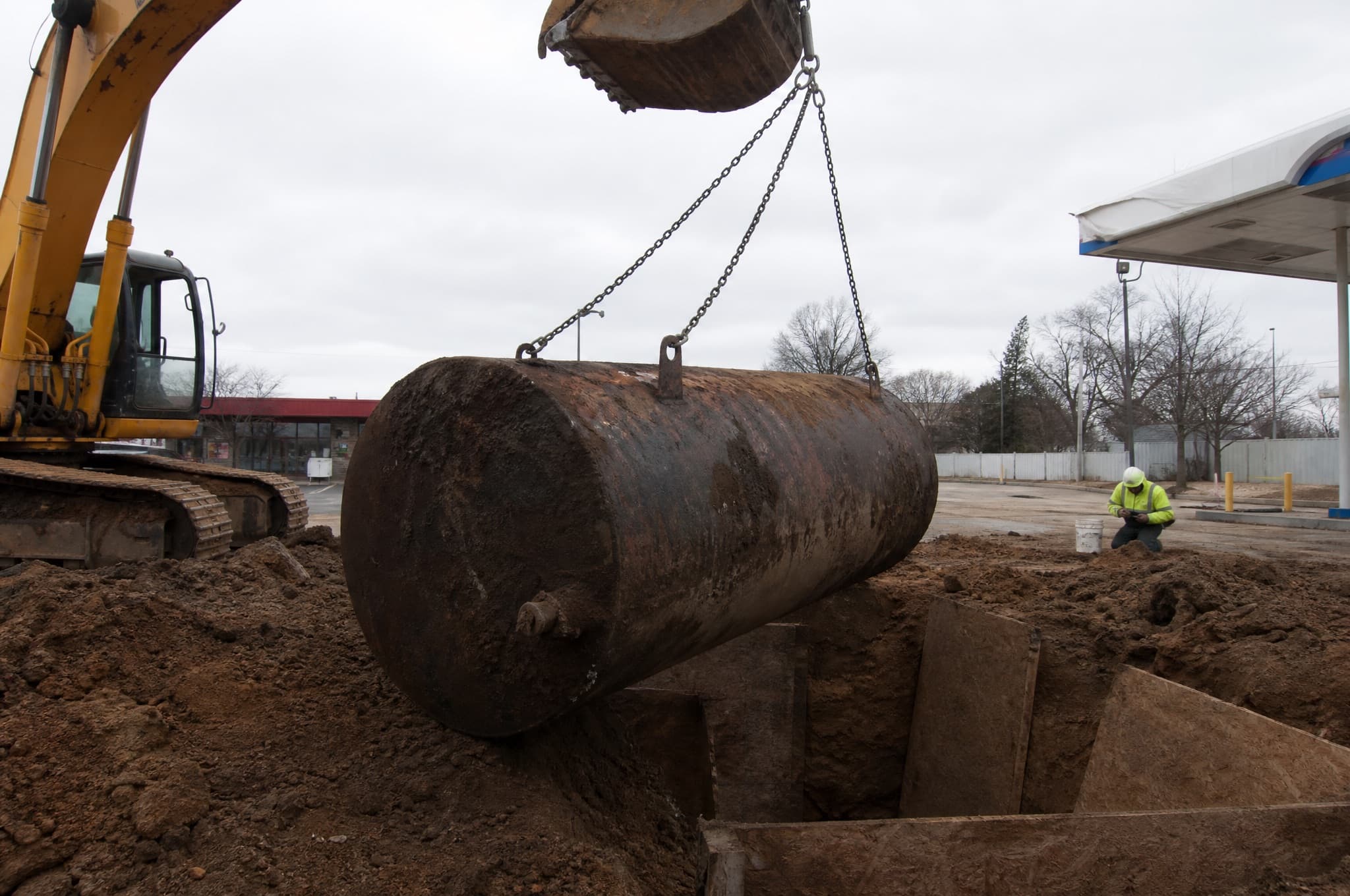
Closure has its own rules. Tanks that are temporarily out of service still have to demonstrate financial responsibility, and tanks that no longer meet the standards, corrosion-unprotected systems, unrepairable failed liners, have to be permanently closed. Permanent closure includes a site assessment to check for releases. We assemble and maintain the financial-responsibility mechanism, file the temporary and permanent closure paperwork, and coordinate the closure assessment so a tank comes out of the ground clean on the record.
- Financial-responsibility amount scales with annual throughput in Virginia
- Acceptable mechanisms include insurance, a CD, a letter of credit, or a self-insurance financial test
- Mechanisms must be in the required form and updated annually
- Temporarily closed tanks must still demonstrate financial responsibility
- Permanent closure requires a site assessment for releases
Common questions
What regulation covers underground storage tanks in Virginia?
Underground storage tanks are regulated under DEQ's UST Technical Regulation, 9VAC25-580, with financial-responsibility requirements in 9VAC25-590. Virginia runs an EPA-approved state program, so the rules track the federal 40 CFR 280 standard but are administered by DEQ's regional offices.
How often do I have to monitor my tanks for leaks?
At least every 30 days, using a release-detection method appropriate for your tanks and piping. Separately, the release-detection equipment itself has to be tested for proper operation at installation and then once a year.
What are the walkthrough inspections DEQ requires?
Since the 2021 amendments, owners have to perform documented walkthrough inspections, checking certain equipment such as spill prevention and release detection every 30 days, and other items annually. Inspectors look at these logs first, so the records matter as much as the equipment.
Do I really need a designated operator on file?
Yes. Virginia requires designated and trained Class A, Class B, and Class C operators for every regulated facility. A missing operator designation or training record is a common DEQ finding even when the equipment is fully compliant.
How much financial responsibility do I have to carry?
It depends on the annual throughput across all the USTs you own or operate in Virginia, higher throughput requires higher coverage. You demonstrate it through an accepted mechanism such as insurance, a certificate of deposit, a letter of credit, or a self-insurance financial test, kept in the required form and updated annually.
What happens if I fail a DEQ inspection?
Inspectors note problems on an inspection report and give you a list of issues to correct with deadlines. Miss the deadlines and the site can face civil penalties and delivery prohibition, which stops fuel deliveries until you are back in compliance. We resolve the findings and handle the correspondence with the regional office to keep that from happening.
Keep your Virginia tanks in compliance with DEQ
From DEQ registration and release-detection schedules to financial responsibility and closure, we run the UST compliance program so a routine inspection stays routine. Talk to Matt about your site.