
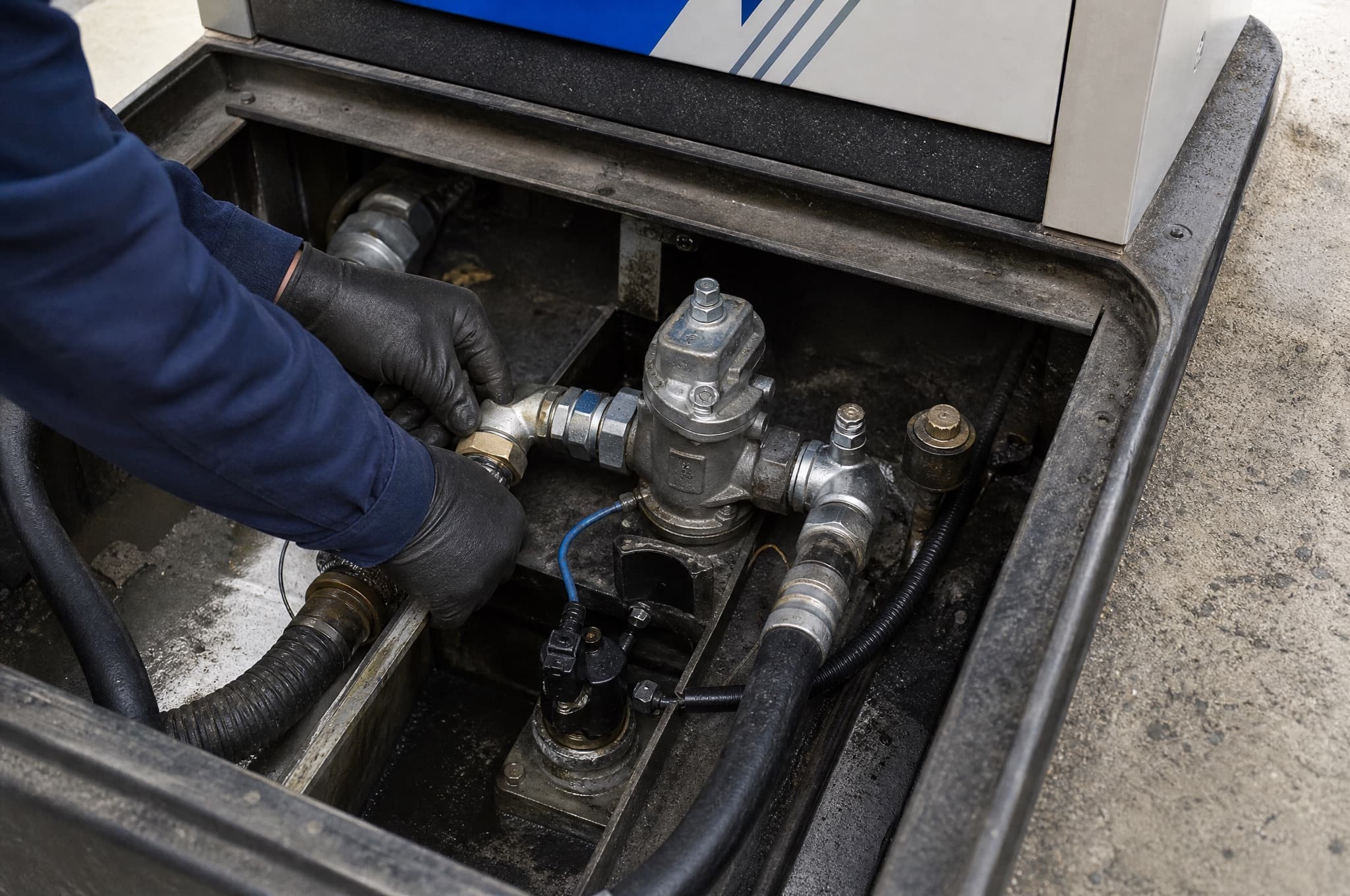
Failed a tank tightness test? Here is what happens next
A failed tank or line tightness test means the system did not hold against the test, and the regulators treat that as a suspected release until you prove otherwise. The single most important thing to know is that this starts a clock. Most petroleum bulk storage rules require you to investigate a suspected release and, once a release is confirmed, report it to the agency fast, measured in hours, not days. The good news: a failed test is a manageable problem when you move quickly and document everything. It becomes an enforcement file when you sit on it.
At a glance
Managing Member · B.S. Civil Engineering, Georgia Tech · 15+ years in fuel systems · Updated June 2026
Do not run the system. A tank or line that failed a tightness test stays out of service until the cause is found and the system is repaired or closed. Keep the tank from being filled or dispensed, preserve the test results and the tester's report, and start the investigation immediately. The tightness test failing is not the violation, operating a system you know is suspect, or failing to report a confirmed release, is.
This is exactly the situation we step into and run. We read the test result, manage the suspected-release investigation, make the reporting call correctly and on time, coordinate the contractor doing the repair or closure, and handle the paperwork the DEC, county, or DEQ needs to close the file. You make the call early and you stay out of the regulator's crosshairs.
Who this applies to
- Gas stations, fleet yards, and fuel depots whose UST or line tightness test came back failing or inconclusive
- Commercial and institutional buildings with diesel or fuel-oil tanks feeding generators or heating systems that failed a periodic test
- Owners and operators in New York under 6 NYCRR Part 613, or in a Suffolk, Nassau, or Westchester county tank program
- Owners and operators in Virginia under DEQ's UST rules at 9VAC25-580
- Buyers, sellers, and lenders where a failed test is holding up a transaction, a Certificate of Occupancy, or a loan closing
What a failed tightness test actually means
A tightness test (also called a precision or leak test) checks whether a tank or its piping holds product without losing or gaining liquid or vapor beyond a tiny allowable rate. When the test fails, the system did not hold to that standard. That can mean an active leak, but it can also mean a faulty test, a bad fitting, a vapor or water issue, or equipment that needs adjustment, which is exactly why the rules treat a failed test as a suspected release to be investigated, not an automatic confirmed leak.
The distinction matters because it sets your obligations. A suspected release triggers an investigation. A confirmed release triggers reporting and corrective action. Your job in the first hours is to move the situation from suspected to confirmed-or-cleared as fast and as cleanly as the rules allow, and to keep the system from operating in the meantime.
An inconclusive or failed line test carries the same weight as a tank test. Pressurized and suction piping leaks are common, often more common than tank-shell failures, and a failed line test puts you on the same investigate-report-resolve path.
The reporting obligation and the clock
This is where speed protects you. The reporting timeline is driven by the agency that regulates your tank, and the windows are short.
In New York, a petroleum release that is not contained on an impervious surface and fully recovered must be reported to the NYSDEC Spill Hotline, generally within two hours of discovery. A confirmed tank or line release, including one a failed tightness test leads you to, is reportable and opens a spill case the DEC tracks to closure. On Long Island and in the lower Hudson Valley, the delegated county program (Suffolk SCDHS, Nassau, or Westchester) is often the agency you also notify and work through.
In Virginia, the UST rules at 9VAC25-580 require an owner or operator to report a confirmed or suspected release to DEQ within 24 hours, and to begin the investigation and initial response steps that follow. The exact triggers and timing are spelled out in the rule; the practical point is the same as New York's, once you have reason to believe product is being lost, the agency needs to hear from you fast.
- New York: report a reportable petroleum spill to the NYSDEC Spill Hotline (1-800-457-7362), generally within two hours
- Long Island / lower Hudson Valley: also coordinate with the county program (Suffolk SCDHS, Nassau, Westchester)
- Virginia: report a confirmed or suspected release to DEQ within 24 hours under 9VAC25-580
- When the call is close, report. The narrow exemptions make under-reporting far riskier than the notification itself
Not sure where you stand? Send what you have.
A photo, the notice, or a sentence about the site is enough to start. Matt reviews it personally and comes back with the likely path.
What not to do
A few moves turn a routine failed test into a serious file. Avoid all of them.
Do not keep using the tank or line. Filling or dispensing from a system that failed a test is the clearest way to take a paperwork problem and make it a release-and-enforcement problem. Do not retest your way out of it without an investigation, a second passing test does not erase the duty to look into why the first one failed. And do not assume the test was simply wrong; a faulty test is one possible cause, but you confirm that through the investigation, not by hoping.
- Do not fill, dispense from, or otherwise operate the failed system
- Do not delay, the reporting clock can start before the day is out
- Do not quietly retest and move on without documenting an investigation
- Do not let the contractor start digging or pulling a tank before the regulatory steps are lined up
- Do not throw away or overwrite the failed test report, inventory records, or monitoring data, you will need them
The decision path: investigate, confirm, then repair or close
Every failed test resolves down one of two roads, and the investigation tells you which. The path is the same everywhere even though the citations and timelines differ by jurisdiction.
First, investigate. Determine whether the failure is a true loss of product or a test or equipment issue, checking the tank, the lines, the leak-detection equipment, inventory and monitoring records, and the test method itself. If the investigation clears the system (a verified test error or a corrected equipment fault, with no product lost), you document the finding and return the system to service.
If the investigation confirms a release, you report on the agency's timeline and move into corrective action: stop and contain the source, assess whether product reached soil or groundwater, and repair the tank or piping or close the system. A confirmed release can pull in a site investigation and cleanup under the state's corrective-action framework, New York's DER-10 process and Virginia DEQ's program being two examples, carried through to a documented agency sign-off. Whether you repair and return to service or close and replace the tank is an engineering and economics call we help you make with the numbers in front of you.
- Investigate the failure, leak vs. test/equipment error, using the tank, lines, leak detection, and records
- Clear it: document a verified test error or corrected fault and return the system to service
- Or confirm it: report on time, contain the source, and assess soil/groundwater impact
- Repair the tank or line and retest, or close the system and plan replacement
- Carry any cleanup to a documented closure with the DEC, county, or DEQ
How Zambrano steps in and runs it
You do not have to referee the regulator, the contractor, and the paperwork at once while a tank sits down. That is the work we take off your plate.
We read the test result and the tester's report, scope the investigation, and make the reporting decision correctly, the right agency, the right window, the right language, so the notification protects you instead of creating new exposure. From there we manage the contractor doing the repair, retest, or closure, keep the field work aligned with what the regulator expects, and build the record that lets the agency close the file: investigation findings, reports, sampling, retest results, and any closure or corrective-action documentation.
Matt has more than 15 years in petroleum storage compliance, with the deepest concentration of that experience in New York's state and county programs. Matt remains directly involved in the technical design and client coordination from the first conversation through closeout. The person who talks to the DEC, county, or DEQ also understands the tank, the piping, and the repair-versus-replace math. One point of contact, start to finish, until the file is clean and the system is back in compliant service.
- Read the failed test, scope the investigation, and make the reporting call on time
- Notify and manage the DEC, county program, or DEQ throughout the case
- Coordinate the contractor for repair, retest, or tank closure
- Assemble the investigation, sampling, and closure paperwork the agency signs off on
- Get the system back to compliant operation, or cleanly closed, and the file shut
Common questions
My tank failed a tightness test. Do I have to report it right away?
You have to investigate it right away, and report once a release is confirmed, often within hours. In New York, a reportable petroleum spill goes to the NYSDEC Spill Hotline generally within two hours of discovery. In Virginia, a confirmed or suspected release is reported to DEQ within 24 hours under 9VAC25-580. A failed test is treated as a suspected release, so when the investigation points to lost product, the clock is short. When the call is close, report.
Does a failed tightness test always mean my tank is leaking?
No. A failed or inconclusive test can come from a true leak, but also from a faulty test, a bad fitting, water or vapor in the system, or leak-detection equipment that needs attention. That is why the rules require an investigation before you treat it as a confirmed release. The investigation either clears the system or confirms the leak, you do not get to assume the test was simply wrong.
Can I keep using the tank until I figure out the cause?
No. A tank or line that failed a tightness test should stay out of service until the cause is found and the system is repaired, retested, or closed. Operating a system you know failed a test is how a manageable paperwork problem becomes a release and an enforcement action. Shut it down, preserve the records, and start the investigation.
What happens after I report a confirmed release?
Reporting opens a case the agency tracks to closure. You contain the source, assess whether product reached soil or groundwater, and repair or close the tank or piping. A confirmed release can pull in a site investigation and cleanup, in New York under the DER-10 framework, in Virginia under DEQ's corrective-action process, carried through to a documented sign-off. We manage that case end to end so it closes cleanly.
Should I repair the tank or just replace it?
It depends on the tank's age, construction, the nature of the failure, and the cost of bringing it back to a defensible standard versus installing a new compliant system. A failed line is often a targeted repair; an old single-wall tank shell may be cheaper to close and replace. We help you make that call with the engineering and the numbers in front of you, then run whichever path you choose.
A failed test is holding up my property sale or Certificate of Occupancy. How fast can this resolve?
Faster the earlier you bring someone in. If the investigation clears the system, you can return it to service and document the finding quickly. If it confirms a release, the timeline depends on the cleanup, but a coordinated response with the reporting handled correctly and the contractor managed is the fastest route to an agency sign-off, which is what a buyer, lender, or building department is waiting on.
Failed a test? Get a clear plan today
Send us the test result and we will tell you what to report, what not to touch, and the fastest path back to compliant operation. Matt manages the regulator, the contractor, and the paperwork so a failed tightness test stays a manageable problem instead of an open enforcement file. Call now or get help today.