
SCDHS fuel tank permitting and compliance in Suffolk County
If your tank sits anywhere in Suffolk County, the rules you answer to are not the state rules. Suffolk County Department of Health Services (SCDHS) enforces Article 12 of the Suffolk County Sanitary Code. Suffolk County maintains an extensive local regulatory program for petroleum and hazardous-material storage facilities, reflecting the importance of protecting the groundwater aquifer system that serves as the County's sole source of drinking water. If you operate here, you have to satisfy SCDHS first, then NYSDEC on top of it.
At a glance
Managing Member · B.S. Civil Engineering, Georgia Tech · 15+ years in fuel systems · Updated June 2026
The short version: Article 12 reaches smaller tanks than the state does, it requires permits and approved plans before you install, modify, or close a tank, and it has banned bare single-wall steel in the ground for decades. Underground tanks have to be double-wall, secondarily contained, and continuously monitored. The county inspects, it cites, and it does not treat paperwork as optional. A tank that would pass a state review in Albany can still be out of compliance in Suffolk.
Suffolk County is one of the jurisdictions where ZE has the most experience, and that experience covers Articles 7, 12 and 18 of the Suffolk County Sanitary Code. We prepare the design drawings and coordinate sealing by an appropriately licensed design professional where the county requires it, file the application with SCDHS, carry it through plan review and the inspection process, and keep the facility registered with both the county and NYSDEC. If you bought a property with an unknown tank, got a violation notice, or need to install or close a system, that is the work we do.
Who this applies to
- Gas stations, fleet yards, and fuel depots anywhere in Suffolk County
- Commercial, industrial, and institutional sites with USTs or ASTs on Long Island
- Schools, hospitals, and municipal facilities with diesel generator or heating-oil tanks
- Property buyers and developers who inherited an existing or abandoned tank
- Owners installing, upgrading, relocating, or closing a tank in the county
Who SCDHS regulates and why the program is extensive
Article 12 of the Suffolk County Sanitary Code governs the storage and handling of toxic and hazardous materials, which includes petroleum, in the entire county. SCDHS administers it through its Office of Pollution Control. Unlike most of New York, where the state petroleum bulk storage program is the front line, in Suffolk the county is the primary regulator and its requirements sit on top of the state's.
The reason is hydrogeology. Long Island draws nearly all of its drinking water from an underground aquifer that the EPA has designated a sole-source aquifer. A leak that would be a contained problem elsewhere can reach the water supply here. So the county wrote rules that assume any tank can fail and engineers the secondary protections accordingly.
The practical effect is that Article 12 reaches tanks the state program would not, demands containment and monitoring the state does not, and requires county sign-off on work that elsewhere would only need a state registration update.
- SCDHS is the lead regulator in Suffolk; NYSDEC Part 613 still applies on top of it
- Article 12 covers petroleum and a broad list of toxic and hazardous materials
- Lower applicability thresholds than the state program, smaller tanks are caught
- Both new installations and existing tanks are subject to the code
Registration, permits, and approved plans
Tanks in Suffolk County have to be registered with SCDHS and kept current. Beyond registration, the county requires a permit and approved engineering plans before you install a new tank, modify or upgrade an existing system, or close one. This is a front-loaded process: the county reviews and approves the design before any work starts in the ground. The county reviews the package against Article 12 and Article 7 (groundwater management zones and water supply sensitive areas).
That is different from a simple state registration, where much of the burden is recordkeeping after the fact. In Suffolk, the plan review is where compliance is won or lost. Drawings that do not show the required double-wall construction, secondary containment, monitoring, overfill protection, and corrosion protection get kicked back, and the project stalls.
We prepare the SCDHS application and the drawing set, sealed by an appropriately licensed design professional where SCDHS requires it, submit to SCDHS, and manage the back-and-forth through plan approval, installation inspections, and the permit issuance so the project does not sit in limbo. We also keep the facility registered with both the county and NYSDEC, since the two registrations are separate.
- Register the facility and tanks with SCDHS, and keep the record current
- County permit and approved plans required before install, modification, or closure
- Plan review checks containment, monitoring, overfill, and corrosion protection up front
- County and NYSDEC registrations are separate, both have to be maintained
Not sure where you stand? Send what you have.
A photo, the notice, or a sentence about the site is enough to start. Matt reviews it personally and comes back with the likely path.
Secondary containment and double-wall requirements
This is the core of the county program. Underground storage tank systems in the county must be double-wall and secondarily contained, tank and piping. The interstitial space between the two walls is monitored so that a breach of the inner wall is detected before product ever reaches soil or groundwater. Bare single-wall steel in the ground has been off the table here for a long time.
Aboveground tanks are held to a containment standard as well. Depending on the installation, that means a double-wall tank, a tank built to a protected standard, or a tank set inside an impermeable containment area sized to hold the contents plus a margin for rainfall. The principle is the same across the county code: there has always to be a second barrier between the fuel and the environment.
In practice we design Suffolk systems around double-wall steel tanks (UL-142), protected tanks where fire rating is needed (UL-2085), double-wall product piping, monitored containment sumps, and interstitial sensors. These are the same protections the county plan reviewers are looking for, and building them in from the drawing stage is what keeps a project moving.
- Double-wall, secondarily contained USTs, tank and piping both
- Continuous interstitial monitoring between the inner and outer walls
- ASTs require double-wall, protected, or contained-area construction
- Single-wall steel directly in the ground is not acceptable
Testing, monitoring, and ongoing recordkeeping
An approved, installed system still has to be operated and maintained to stay in compliance. Leak detection and monitoring run continuously, and the county expects the supporting tests and records to be current and available when an inspector shows up.
That includes tank and line tightness testing on the required schedule, function testing of leak-detection and alarm equipment, inspection of containment sumps and spill buckets, and verification that overfill prevention and, where applicable, corrosion protection are working. A failed tightness test is a reportable problem, not a wait-and-see one.
We keep clients on a calendar so the testing, monitoring documentation, and registration renewals do not lapse. Most violations we get called in to fix are not catastrophic leaks. They are missed tests, expired registrations, or gaps in records that turn an otherwise sound tank into a citation.
- Scheduled tank and line tightness testing, kept on file
- Function testing of leak detection, alarms, and overfill equipment
- Containment sump and spill-bucket inspection and integrity testing
- Current registration, monitoring logs, and inspection records on hand
How Article 12 differs from NYSDEC Part 613
NYSDEC's Part 613 is the statewide petroleum bulk storage standard, and it applies in Suffolk County too. But Article 12 goes further on the points that matter, so the county code is the one that sets the bar.
Where the state allows certain single-wall configurations with monitoring, Suffolk requires double-wall and secondary containment outright. Where the state program is largely registration and recordkeeping driven, Suffolk requires permits and approved engineering plans before work begins. And the county's applicability reaches tanks that fall below the thresholds people associate with the state and federal programs. The federal SPCC rule is a separate program again, and one a Suffolk facility may also carry: 40 CFR 112 reaches a facility when its aggregate aboveground oil storage capacity is more than 1,320 gallons and the facility could reasonably be expected to discharge oil to navigable waters or adjoining shorelines, so the gallon figure is one condition rather than the whole test.
- Containment: Suffolk mandates double-wall and secondary containment; Part 613 is more permissive
- Process: Suffolk requires up-front permits and approved plans; Part 613 leans on registration
- Reach: Article 12 applicability catches smaller tanks than people expect
- Stacking: you comply with SCDHS and Part 613, and often federal SPCC, all at once
Common questions
Do I have to register my tank with both SCDHS and NYSDEC?
In most cases, yes. Suffolk County requires registration under Article 12, and the tank may also fall under the state's petroleum bulk storage program with NYSDEC. They are separate registrations with separate records, and both have to be kept current. We maintain both for clients so neither lapses.
Are single-wall underground tanks allowed in Suffolk County?
No. Underground storage tank systems in Suffolk County must be double-wall and secondarily contained, with the interstitial space monitored for leaks. Bare single-wall steel in the ground has not been acceptable here for a long time. If you have an older single-wall tank, it is a candidate for upgrade or closure.
Why does Suffolk County regulate storage tanks so extensively?
Suffolk County maintains an extensive local regulatory program for petroleum and hazardous-material storage facilities, reflecting the importance of protecting the groundwater aquifer system that serves as the County's sole source of drinking water. A tank leak that would be a contained problem elsewhere can reach that water supply, so the county built Article 12 around the assumption that any tank can fail and required the secondary protections to match.
Do I need a permit before installing or closing a tank?
Yes. SCDHS requires a permit and approved engineering plans before you install, modify, upgrade, or close a tank. The county reviews and approves the design before any work happens in the ground. Starting work without approval is one of the faster ways to draw a violation.
I bought a property with an old or abandoned tank. What now?
Start by confirming whether the tank is registered and whether it meets current Article 12 construction and monitoring standards. Many inherited tanks are single-wall, unregistered, or out of service and still on the books. We assess the system, file what is missing, and lay out whether the right move is upgrade or closure.
Can Zambrano file the SCDHS permit application for me?
Yes. We prepare the design drawings and coordinate sealing by an appropriately licensed design professional where the county requires it, file the application with SCDHS, carry it through plan review and inspection, and keep the facility registered with both the county and NYSDEC. Our Suffolk County experience covers Articles 7, 12 and 18 of the Sanitary Code. If you also have a NYSDEC or SPCC obligation, we cover those in the same engagement.
Related Zambrano Enterprises project work.
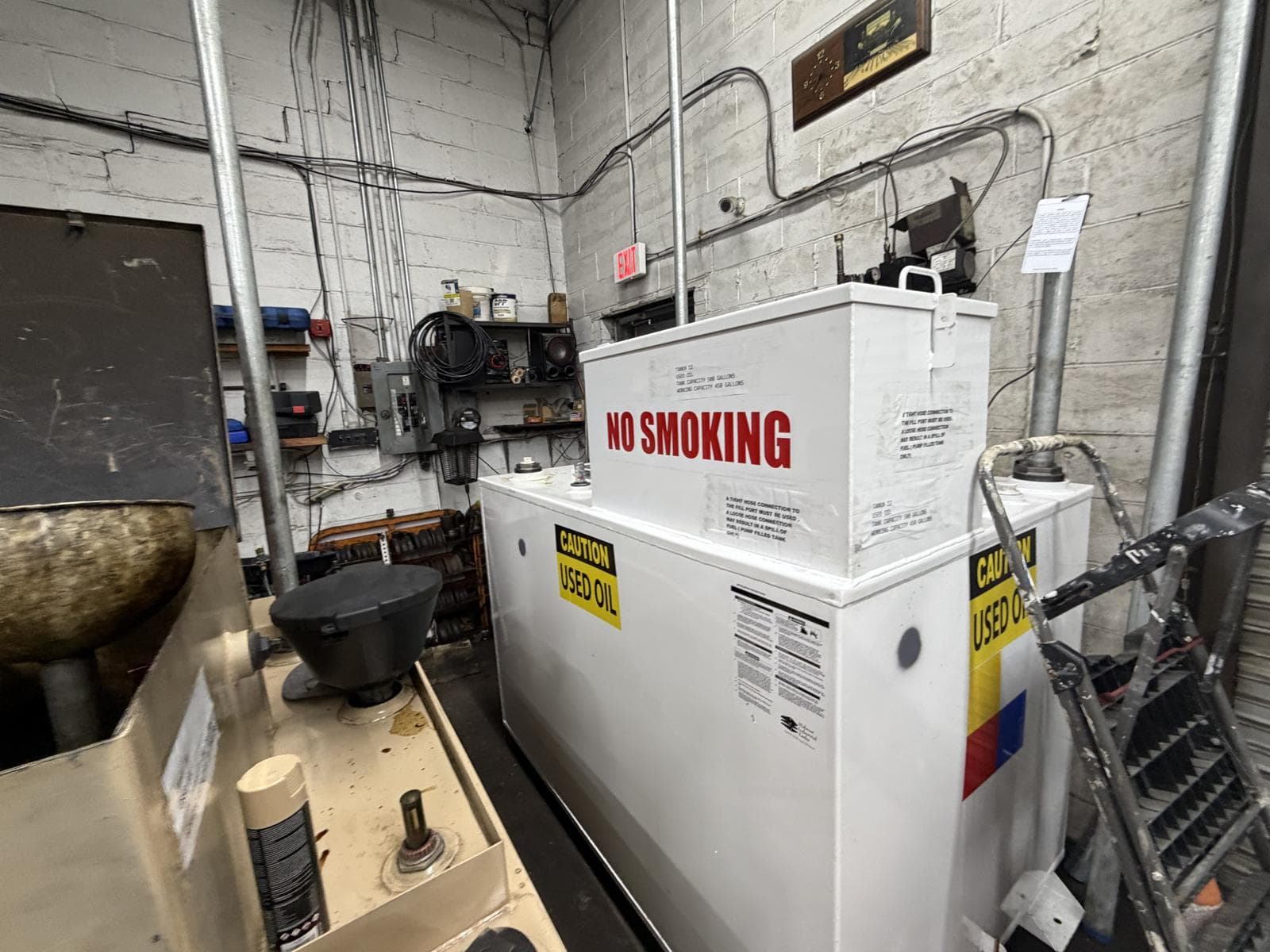
West Babylon, New York
Babylon Complete Auto Repair — Lube Oil Storage & Used-Oil Heating
Automotive repair and maintenance
View project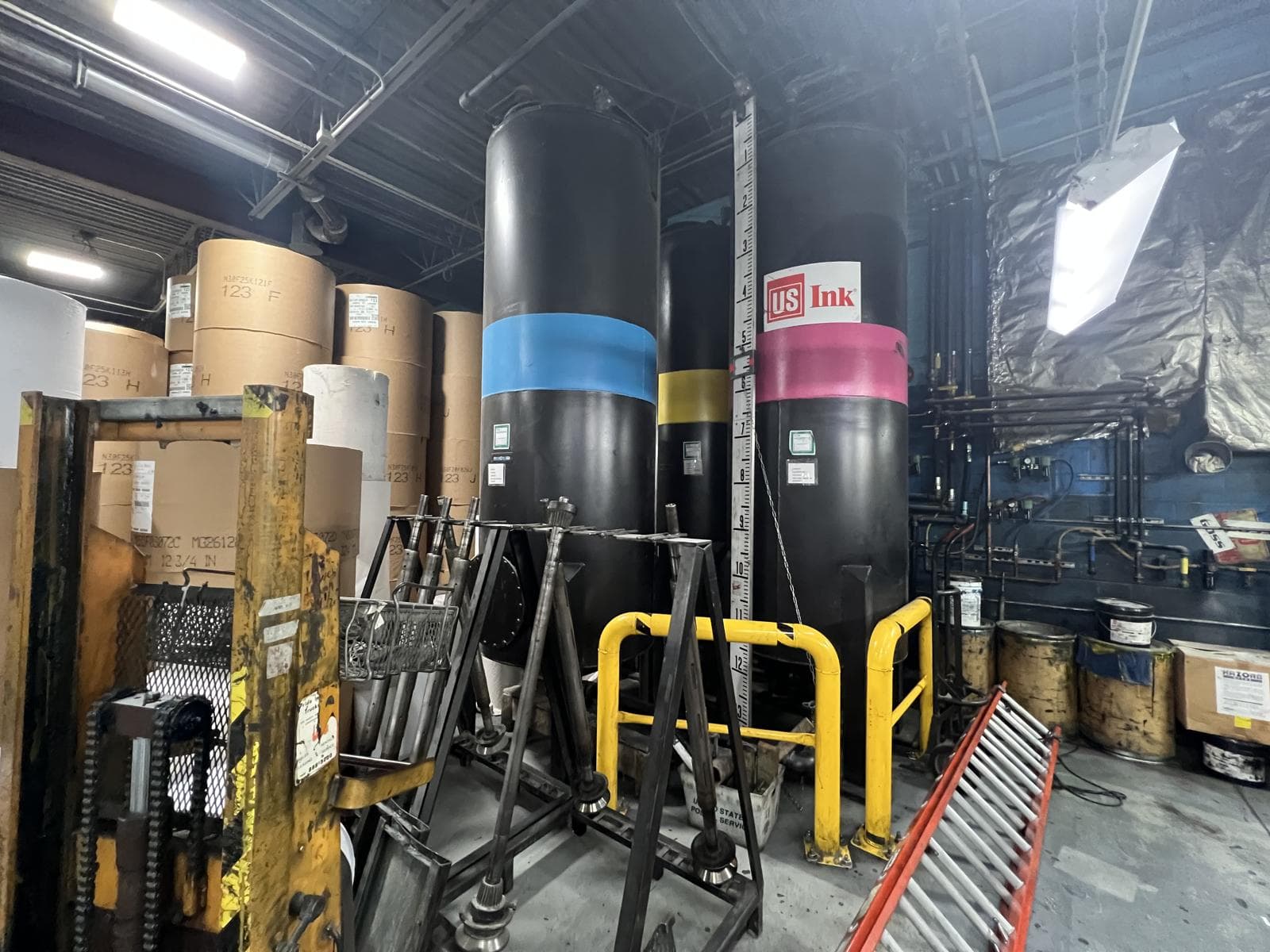
Shirley, New York
Atlantic Color Corporation — Ink Storage Compliance Improvements
Industrial printing-ink storage
View projectMore related projects
Tank in Suffolk County? Get it right with the county first.
Matt Zambrano prepares the drawings, coordinates the seal SCDHS requires, files your SCDHS application, and keeps you registered with both the county and NYSDEC. Tell us about your tank and we will tell you exactly where it stands.