
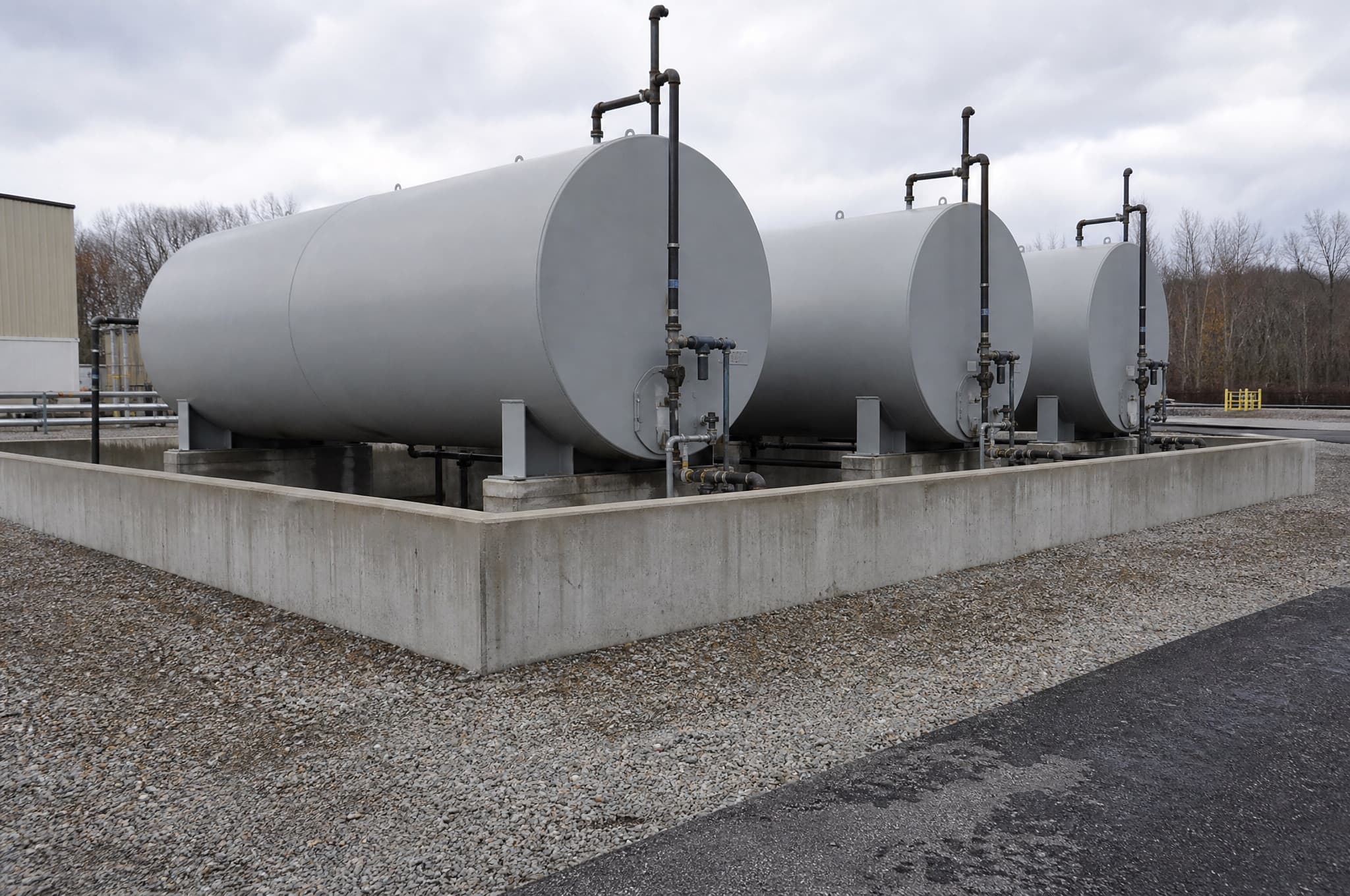
SPCC plans for New York facilities
If your New York facility stores oil aboveground and a spill could reach a creek, storm drain, ditch, harbor, or any other water of the United States, federal law most likely requires you to have a Spill Prevention, Control, and Countermeasure (SPCC) plan. The rule lives at 40 CFR Part 112, the U.S. EPA enforces it, and it applies in New York the same way it applies everywhere else in the country. The plan has to be written, kept on site, and fully put into practice before a spill happens, not drafted after one.
At a glance
Managing Member · B.S. Civil Engineering, Georgia Tech · 15+ years in fuel systems · Updated June 2026
Applicability is not decided by a single number. A facility is covered by 40 CFR Part 112 when it is a non-transportation-related facility that stores, uses or transfers oil, its aggregate aboveground oil storage capacity in containers of 55 gallons or more is more than 1,320 gallons (or its completely buried storage is more than 42,000 gallons), and there is a reasonable expectation that a discharge could reach navigable waters or adjoining shorelines. The 1,320-gallon figure is one of those conditions, not the whole test. "Oil" is defined broadly here: gasoline, diesel, used oil, hydraulic and lubricating oils, heating oil, and even some animal and vegetable oils all count. Capacity is measured by tank shell size, not by how much product you happen to be holding, and containers under 55 gallons are excluded from the count.
Zambrano Enterprises prepares SPCC plans and coordinates Professional Engineer certification when required. We also review and update existing plans for facilities across New York. Below is a plain-English walk through who needs a plan, when you can self-certify versus when a Professional Engineer has to sign it, what secondary containment actually requires, and how the federal SPCC rule fits alongside NYSDEC's Part 613 program and the county tank codes in Suffolk, Nassau, and Westchester.
Who this applies to
- Fuel distributors, terminals, and bulk plants with aboveground tanks in New York
- Construction yards, contractors, and quarries storing diesel and used oil on site
- Manufacturing plants, warehouses, and fleets with bulk lubricant, hydraulic, or heating oil
- Commercial, institutional, and municipal sites with backup generator day tanks and oil-filled equipment
- Gas stations, fleet fueling depots, and properties with large aboveground fuel-oil tanks
Who needs an SPCC plan in New York
SPCC is a federal rule under the Clean Water Act, so the test is the same in New York as in any other state. You are subject to 40 CFR Part 112 if all three of the following are true: you are a non-transportation-related facility, you store, use, or transfer oil, and there is a reasonable expectation that a discharge could reach navigable waters or adjoining shorelines.
That last point matters in New York more than people expect. Between the Hudson, the Long Island Sound, the harbor, the Finger Lakes, and the dense storm-drain networks that feed all of them, very few commercial or industrial sites can credibly claim a spill could never reach water. EPA does not let you subtract the effect of containment or drainage controls when you make that judgment. You assume the oil gets out and ask where it would go.
- Aggregate aboveground oil storage capacity above 1,320 gallons at the facility, or
- Completely buried oil storage capacity above 42,000 gallons (most regulated USTs fall under separate UST and PBS rules instead), and
- A reasonable expectation of discharge to a water of the United States.
Self-certification, Tier I and Tier II, and PE certification
Whether a plan can be self-certified depends on whether the facility meets the qualified-facility criteria in the rule: aggregate aboveground oil storage capacity of 10,000 gallons or less, and the oil-discharge history criteria EPA defines. Qualified facilities can self-certify their own plan, in both Tier I and Tier II. The difference between the two tiers is the facility's characteristics, primarily whether any single aboveground container holds more than 5,000 gallons and the plan format that follows from it, not who signs the plan.
A facility that does not meet the qualified-facility criteria needs a plan reviewed and certified by a licensed Professional Engineer. Either way the substance of the plan has to be right.
- Tier I qualified facility: 10,000 gallons or less aggregate aboveground, no single aboveground container over 5,000 gallons, and the rule's discharge history criteria met. The owner self-certifies on EPA's Appendix G template.
- Tier II qualified facility: 10,000 gallons or less aggregate aboveground and the same discharge history criteria, but with an aboveground container over 5,000 gallons. The owner still self-certifies, using a full plan format rather than the template.
- PE-certified plan: required when the facility does not meet the qualified-facility criteria, including once aggregate aboveground capacity is over 10,000 gallons. A licensed Professional Engineer reviews, certifies and signs.
Not sure where you stand? Send what you have.
A photo, the notice, or a sentence about the site is enough to start. Matt reviews it personally and comes back with the likely path.
Secondary containment is the core of the plan
The heart of every SPCC plan is keeping a spill from leaving the property. The rule requires "sized" secondary containment for bulk storage tanks: the containment must hold the full capacity of the largest single tank plus enough freeboard for precipitation. For most tanks that means a dike, berm, remote impoundment, or a double-walled tank rated for the job.
Beyond the main tanks, the plan has to address "general" containment at the places oil is most likely to escape during normal operations: loading and unloading areas, transfer points, mobile fueling, and oil-filled equipment. The plan also covers inspections, integrity testing, overfill protection, employee training, and the spill-response steps your people follow if something does get out.
- Sized containment for bulk tanks: largest tank's volume plus freeboard for rainfall
- General containment at loading, unloading, and transfer points
- Tank inspection and integrity-testing schedules with records kept on site
- Overfill prevention, drainage controls, and security measures
- Personnel training and a written discharge-response procedure
How SPCC sits alongside NYSDEC Part 613
SPCC is federal and it is not the only oil-storage rule a New York facility has to satisfy. New York runs its own Petroleum Bulk Storage (PBS) program under 6 NYCRR Part 613, and most sites that need an SPCC plan are PBS facilities as well. The two programs overlap in subject matter but trigger at different volumes and answer to different agencies, so a well-built SPCC plan should be written to support PBS compliance rather than sit apart from it.
The state PBS threshold is lower than the federal SPCC threshold and counts differently: a facility is regulated under Part 613 once its petroleum storage tanks add up to more than 1,100 gallons, and that total counts underground and aboveground capacity together. SPCC counts only aboveground capacity, sets its capacity condition at 1,320 gallons, and applies only where a discharge could reasonably reach navigable waters or adjoining shorelines. The practical result is that many New York sites carry both obligations at once, registering and inspecting tanks under Part 613 with the NYSDEC while maintaining a written SPCC plan for the EPA.
- 40 CFR 112 (SPCC): federal, U.S. EPA, applies above 1,320 gallons aggregate aboveground where a discharge could reach navigable waters; spill prevention and secondary containment
- 6 NYCRR Part 613 (NY PBS): state, NYSDEC, triggers at 1,100 gallons combined UST and AST capacity; registration, equipment standards, inspections, testing, closure
- Tank registration and renewals filed through the DEC's nForm portal, kept current as the facility changes
- An SPCC plan written so its containment, inspection, and spill-response sections line up with the facility's PBS records
County tank rules in the New York metro area
On Long Island and in the lower Hudson Valley, county codes add a third layer on top of SPCC and state PBS. These counties sit over sole-source or heavily relied-upon drinking-water aquifers, so their health departments regulate petroleum and chemical storage directly, with their own permits, inspections, and tank standards that can be stricter than the state baseline.
If your facility is in Suffolk, Nassau, or Westchester, the SPCC plan is one piece of a larger compliance picture. We build the federal plan with the county requirements in view so the containment, monitoring, and recordkeeping satisfy the local code as well as 40 CFR 112, and we coordinate the county permits and renewals that run in parallel.
- Suffolk County: storage regulated under the SCDHS code (Articles 7, 12 and 18), administered by the Suffolk County Department of Health Services over the sole-source aquifer
- Nassau County: petroleum bulk storage permitted and inspected under Article XV of the Nassau County Public Health Ordinance
- Westchester County: storage regulated under the county's Article XXV tank-storage requirements
- County permits, inspections, and renewals coordinated alongside the SPCC plan and the state PBS registration
What we deliver for New York sites
We handle the full SPCC plan from site visit to signed document. That starts with walking the facility, inventorying every container that counts toward the threshold, and evaluating your existing containment, drainage, and transfer areas against the rule.
From there we write the plan and specify the containment and controls that bring the site into compliance. Zambrano Enterprises prepares SPCC plans and coordinates Professional Engineer certification when required; when the facility is a qualified facility, we prepare the plan for the owner's self-certification. We also handle the five-year reviews and the amendments the rule requires whenever you add a tank, change a process, or otherwise alter the facility in a way that materially affects spill potential, and we keep the plan aligned with your Part 613 and county obligations.
- On-site assessment, container inventory, and containment evaluation
- Full SPCC plan drafted to 40 CFR 112 for New York conditions
- Coordination of Professional Engineer certification when the rule requires it, or a built-right plan for owner self-certification when the facility qualifies
- Five-year reviews and amendments when the facility changes
- Coordination with NYSDEC Part 613 and Suffolk, Nassau, or Westchester county requirements where they apply
Common questions
Does my New York facility need an SPCC plan?
If your aggregate aboveground oil storage capacity at the facility is more than 1,320 gallons (or buried capacity is more than 42,000 gallons) and a spill could reasonably reach a creek, storm drain, harbor, or other water of the United States, then yes, 40 CFR 112 requires a written SPCC plan kept on site. The federal rule applies in New York exactly as it does nationwide.
Can I write and certify my own SPCC plan, or do I need a PE?
If your facility stores 10,000 gallons or less aboveground and meets the rule's oil-discharge history criteria, it is a qualified facility and the owner can self-certify the plan. That is true in both Tier I and Tier II: the tier depends on the facility's characteristics, primarily whether any single aboveground container holds more than 5,000 gallons, not on who signs. If the facility does not meet the qualified-facility criteria, a licensed Professional Engineer must review and certify the plan. Zambrano Enterprises prepares SPCC plans and coordinates Professional Engineer certification when required, and builds self-certified plans to the same technical standard.
How is an SPCC plan different from NYSDEC Part 613 registration?
They are two separate requirements. SPCC is the federal spill-prevention rule under 40 CFR 112, enforced by the EPA, and reaches facilities with more than 1,320 gallons of aggregate aboveground oil storage capacity where a discharge could reasonably reach navigable waters. Part 613 is New York's state Petroleum Bulk Storage program, run by the NYSDEC, and triggers at 1,100 gallons of combined underground and aboveground capacity, requiring registration, inspections, and testing. Many New York facilities carry both obligations at once.
What counts toward the 1,320-gallon SPCC capacity condition?
Every aboveground container with a capacity of 55 gallons or more: bulk tanks, drums, totes, generator day tanks, and oil-filled equipment such as transformers. It is measured by container shell capacity, not by the amount of product on hand. Containers smaller than 55 gallons are not counted.
I'm in Suffolk, Nassau, or Westchester. Does that change anything?
Yes. Those counties regulate petroleum and chemical storage directly under their own codes (Suffolk Articles 7, 12 and 18 through the SCDHS, Nassau Article XV, Westchester Article XXV), with permits and inspections that can be stricter than the state baseline because of the underlying aquifers. We build the SPCC plan so it satisfies the county requirements alongside 40 CFR 112 and coordinate the local permits.
How often does an SPCC plan have to be updated?
The rule requires you to review and evaluate the plan at least once every five years, and to amend it whenever a change at the facility materially affects spill potential, such as adding a tank, changing a transfer process, or reconfiguring containment. Amendments tied to a physical change generally need to be made and certified within set timeframes after the change.
Need an SPCC plan for your New York facility?
We assess the site, inventory what counts toward the capacity condition, and deliver a plan that holds up in an EPA inspection, with Professional Engineer certification coordinated when the rule requires it and the plan aligned with your Part 613 and county obligations. Talk to Matt about your tanks and timeline.