
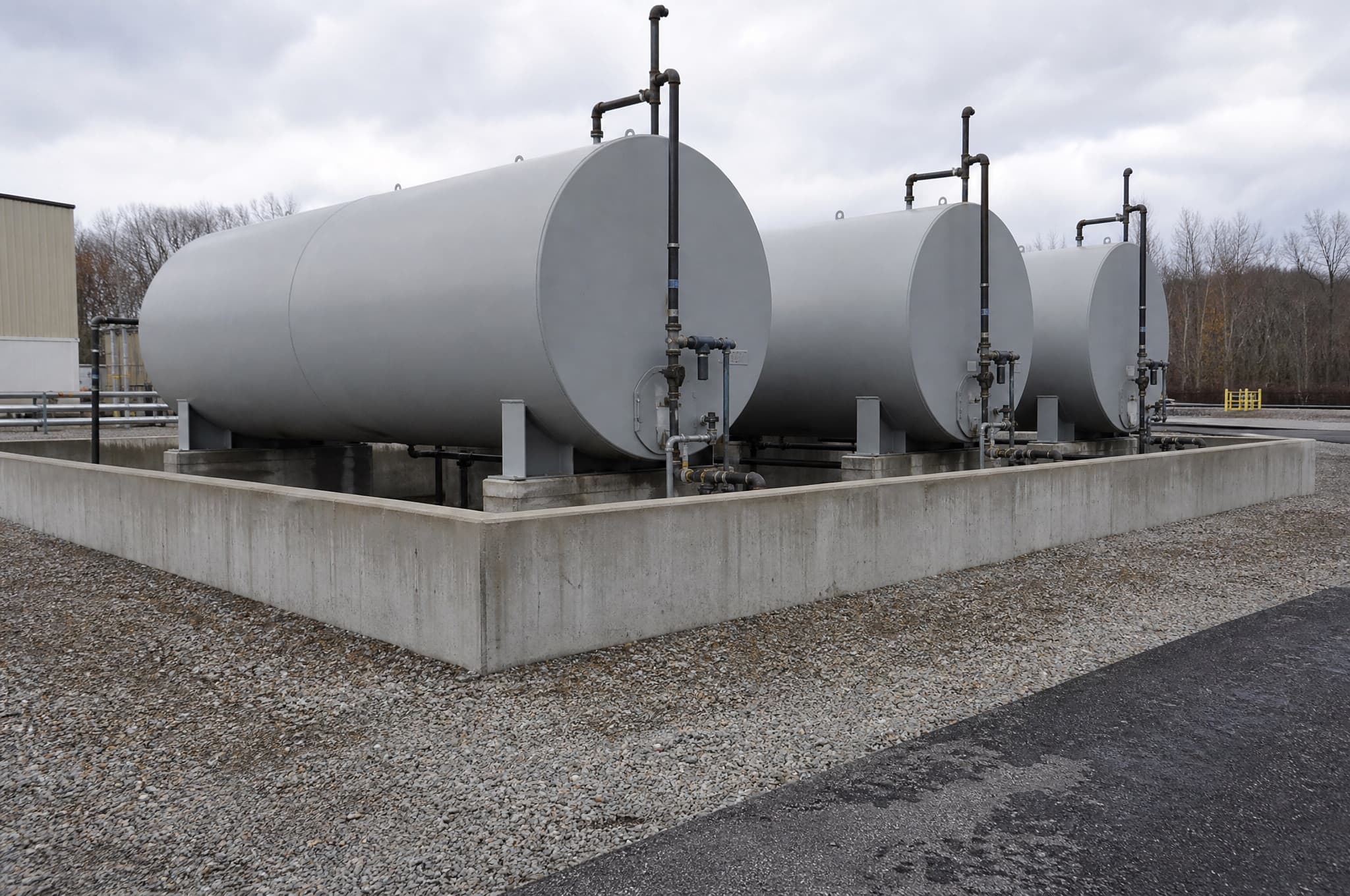
Operating without a current SPCC plan?
If your facility stores more than 1,320 gallons of oil aboveground, could reasonably be expected to discharge oil to navigable waters or adjoining shorelines, and does not have a current, certified SPCC plan on site, you are out of compliance right now, not at some future inspection. The Spill Prevention, Control, and Countermeasure rule lives at 40 CFR Part 112, the U.S. EPA enforces it, and the requirement applies the same way in every state. The same is true if you have a plan but it has gone stale: the rule requires you to review and amend the plan at least once every five years, and a plan that blew past its five-year review no longer counts as a compliant plan.
At a glance
Managing Member · B.S. Civil Engineering, Georgia Tech · 15+ years in fuel systems · Updated June 2026
The good news is that this is a fixable problem, and it is fixable fast. The risk is not the paperwork itself; it is what the missing plan does to you if a discharge happens before you close the gap. A spill at a facility with no SPCC plan, or an out-of-date one, turns a manageable cleanup into a documented federal violation with penalty exposure and a much harder liability position.
Zambrano Enterprises prepares SPCC plans and coordinates Professional Engineer certification when required. We also review and update existing plans, for facilities nationwide. If you already know you are exposed, the fastest path is a short call: we tell you on the phone whether you are in scope, what tier of plan you need, and how quickly we can get a signed document on your wall.
Who this applies to
- Facilities over the 40 CFR 112 conditions, including more than 1,320 gallons of oil aboveground, with no SPCC plan on site
- Owners whose existing SPCC plan is past its required five-year review or amendment
- Sites that added tanks, changed a transfer process, or reconfigured containment without updating the plan
- New owners or operators who inherited a facility and cannot locate a current certified plan
- Anyone who just had a spill, a near-miss, or an inspection notice and realized the plan is missing or stale
No plan is itself the violation
People tend to think of the SPCC rule as something that only matters if oil actually gets out. It is not. Once your facility meets the rule's conditions, which include more than 1,320 gallons of aggregate aboveground capacity and a discharge that could reasonably reach a water of the United States, the rule requires a written plan that is fully prepared, certified, and implemented before any spill. Not having that plan is the violation, whether or not a drop has ever left your property.
That is why an EPA inspector can write you up on a clean, dry site. The first thing they ask for is the plan. If it does not exist, if it is unsigned, or if it has not been reviewed inside the five-year window, the facility is non-compliant on its face, and the inspection moves from a routine check to an enforcement footing.
The 1,320-gallon capacity condition and what counts
Capacity is one of the conditions, not the whole test, and it is about tank and container capacity rather than how much product you happen to be holding. The capacity condition is met once your aggregate aboveground oil storage capacity at a single facility is more than 1,320 gallons (completely buried storage has a separate, higher trigger of 42,000 gallons, and most regulated underground tanks fall under UST rules instead).
"Oil" is broad here. Gasoline, diesel, used and waste oil, hydraulic and lubricating oils, heating oil, and even some animal and vegetable oils all count. When you add it up, count every aboveground container of 55 gallons or more, which is how a lot of facilities cross the line without realizing it: a couple of bulk tanks, a few drums and totes, a generator day tank, and oil-filled equipment add up quickly.
- Aggregate aboveground oil capacity over 1,320 gallons at one facility, together with a reasonable expectation of discharge to navigable waters, puts you in scope
- Count every container 55 gallons and larger: bulk tanks, drums, totes, day tanks, oil-filled equipment
- Capacity is measured by tank shell size, not by current fill level
- A reasonable expectation that a spill could reach a creek, ditch, storm drain, or other water of the U.S. is the second trigger
Not sure where you stand? Send what you have.
A photo, the notice, or a sentence about the site is enough to start. Matt reviews it personally and comes back with the likely path.
What you are exposed to without a current plan
The exposure comes in two forms. The first is direct enforcement: operating without a required, certified, up-to-date SPCC plan is a violation of the Clean Water Act, and EPA can assess civil penalties for it. Penalties scale with the facility, the duration of the violation, and whether a discharge occurred, so the longer a site runs uncovered, the worse the position gets.
The second form is the one that actually hurts. If a spill happens while you have no plan, or a stale one, you have lost the protection the plan was built to give you. You are now cleaning up a discharge and answering for why the federally required prevention plan was missing or out of date at the same time. That combination drives up cleanup cost, third-party liability, and the size of any penalty, and it makes the whole event far harder to defend. A current plan does not just check a box; it is the document that shows you did the prevention work the law asked for.
- Civil penalty exposure under the Clean Water Act for operating without a compliant plan
- Loss of the prevention-and-containment posture the plan is designed to provide
- Higher cleanup and third-party liability if a discharge occurs while you are uncovered
- A weaker position in any inspection, enforcement action, or insurance claim that follows a spill
Stale plans: the five-year review most owners miss
Having a plan is not a one-time event. The rule requires you to review and evaluate the plan at least once every five years and to amend it whenever a change at the facility materially affects the potential for a discharge. A plan that sailed past its five-year review is no longer a compliant plan, even if every word in it is still technically accurate.
The more common trap is the material change that never made it into the plan. If you added a tank, swapped in larger storage, changed a loading or transfer process, or reconfigured containment and the SPCC plan still describes the old facility, the plan is out of date by definition. An inspector who walks a site that does not match the plan on file has found a problem before they have read a single page.
- Review and amend the plan at least once every five years
- Amend whenever you add or replace a tank, change throughput, or change a transfer process
- Amend when containment, drainage, or the site layout materially changes
- Keep the certified, current version on site and accessible to your operators
How fast we get you compliant
Closing this gap is a defined piece of work, and we move on it quickly. It starts with a site visit: we walk the facility, inventory every container that counts toward the threshold, and evaluate your existing containment, drainage, and transfer areas against 40 CFR 112. From there we write the plan and specify the containment and controls that bring the site into compliance.
Zambrano Enterprises prepares SPCC plans and coordinates Professional Engineer certification when required. A facility that does not meet the rule's qualified-facility criteria, including once aggregate aboveground capacity is over 10,000 gallons, needs a licensed Professional Engineer to review and certify the plan, and ZE coordinates that through established professional relationships. A qualified facility self-certifies its own plan, in both Tier I and Tier II, and we build those to the same technical standard. Either way, you end up with a signed, implemented plan on the wall and a clear schedule for the five-year reviews and amendments that keep it that way.
- Site visit, full container inventory, and containment evaluation against 40 CFR 112
- Plan written and the controls needed to bring the site into compliance specified
- Professional Engineer certification coordinated when the rule requires it; a built-right plan for owner self-certification when the facility qualifies
- A standing schedule for five-year reviews and change-driven amendments so it never goes stale again
Common questions
Is operating without an SPCC plan actually illegal, even if nothing has spilled?
Yes. If your facility is in scope (a non-transportation-related facility storing oil, more than 1,320 gallons aboveground, and a reasonable expectation that a spill could reach a water of the United States), 40 CFR Part 112 requires a written, certified, implemented plan to be in place before any discharge. Not having that plan is itself a violation of the rule, regardless of whether oil has ever left the site. EPA can write you up on a dry, clean facility.
My SPCC plan is more than five years old. Is it still valid?
Not as a compliant plan. The rule requires you to review and evaluate the plan at least once every five years. A plan that passed its five-year mark without that review and any needed amendments is out of date and is treated for enforcement purposes much like not having a plan. The fix is a review, an update for anything that changed at the site, and re-certification.
What is the penalty for not having a current SPCC plan?
Operating without a required, current SPCC plan is a Clean Water Act violation, and EPA can assess civil penalties for it. The amount depends on the facility, how long the violation continued, and whether a discharge occurred, so we do not quote a fixed figure. The larger and longer-running exposure usually comes from a spill that happens while you are uncovered, which raises cleanup cost, liability, and any penalty all at once.
How quickly can you get a compliant plan in place?
Faster than most owners expect. The work is a site visit, a container inventory and containment evaluation, drafting the plan, and certifying it. We can usually schedule the site visit promptly and turn the plan around on a timeline that fits an inspection notice or a closing. Tell us your deadline on the first call and we will tell you honestly whether we can hit it.
I just bought a facility and cannot find an SPCC plan. What do I do?
Assume you need one and treat it as a priority. As the new owner or operator you are responsible for having a current, certified plan on site, regardless of what the previous owner did or did not do. We will inventory the tanks, confirm whether the facility meets the conditions in 40 CFR 112, and build or rebuild the plan from the actual facility as it stands today.
Do I need a Professional Engineer to certify the plan?
It depends on whether the facility meets the rule's qualified-facility criteria. A facility with more than 10,000 gallons of aggregate aboveground oil storage, or that does not meet the qualified-facility discharge criteria, needs a licensed Professional Engineer to review and certify the plan. ZE prepares those plans and coordinates the Professional Engineer certification. A qualified facility self-certifies its own plan, in both Tier I and Tier II, and we build those to the same standard so they hold up in an inspection.
No plan, or an overdue one? Let's close the gap now.
Operating without a current, certified SPCC plan is a federal violation today, and a much bigger problem the day something spills. Call Matt, tell us about your tanks, and we will get a compliant plan in place fast, with Professional Engineer certification coordinated where the rule requires it.