
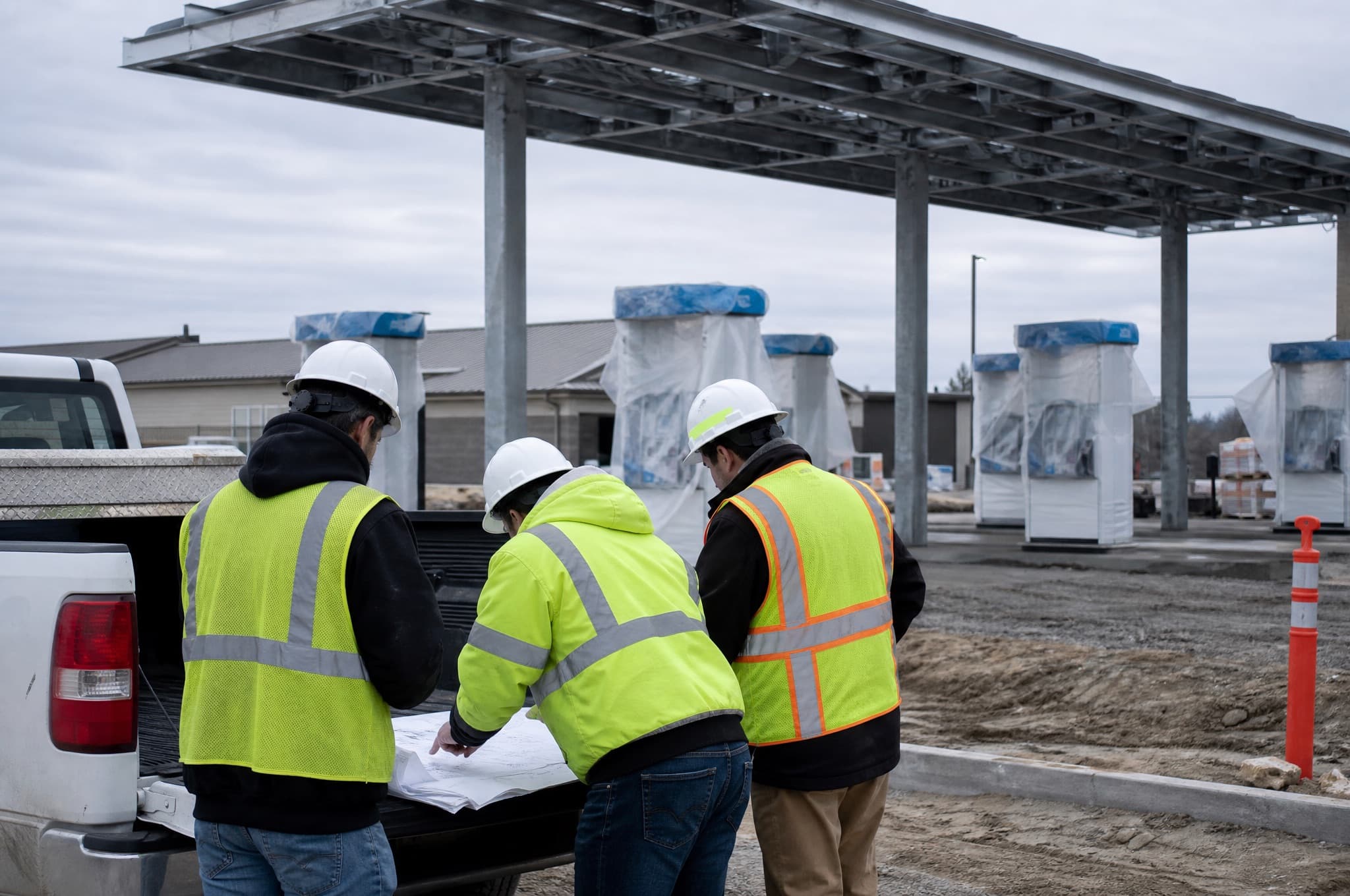
Certificate of Occupancy held up over a fuel system?
A Certificate of Occupancy gets held when the fuel side of the building has not been signed off. The tank registration does not match what was installed, the spill or overfill equipment was never inspected, the fire-suppression sign-off is missing, the dispenser signage or labeling is wrong, or the closure of an old tank was never documented. The building department or fire marshal will not release the CO until that open item is closed, and the project sits, finished construction, no occupancy, no revenue.
At a glance
Managing Member · B.S. Civil Engineering, Georgia Tech · 15+ years in fuel systems · Updated June 2026
We clear that holdup. We find out exactly which agency is holding the file and why, get the fuel system documented to the standard they sign off on, and run the registration, inspection, variance, or closure paperwork through to a final sign-off so the CO releases. This is bread-and-butter work for us: the fastest path is almost always a single point of contact who knows what NYSDEC, the local building department, the fire marshal, and the county health department each need, and who can get all of them lined up at once instead of one at a time.
If you are sitting on a temporary CO, a held Certificate of Completion, or a punch list that names a tank, fuel line, generator, dispenser, or fire-suppression item, send it over. We will tell you what it actually takes to clear it and how long that should run.
Who this applies to
- Owners and developers whose new build, renovation, or change-of-use is finished but cannot get a final CO because of a tank, fuel line, generator, or dispenser
- Gas stations, fleet and fuel depots, and quick-serve sites where dispenser, signage, leak-detection, or fire-suppression sign-off is the open item
- Commercial and institutional buildings with a diesel or fuel-oil tank feeding heating or an emergency generator that the fire marshal has not cleared
- Buyers and sellers stuck at the closing table because an old or undocumented tank has to be closed or registered before occupancy transfers
- Project managers and GCs holding a punch list that names a PBS, fire-suppression, or fuel-system item and need it closed to hand the building over
Why a fuel system blocks a Certificate of Occupancy
A Certificate of Occupancy is the building department's statement that the structure is legal to occupy for its intended use. Before it issues, every trade and life-safety system has to be signed off, and a fuel storage or dispensing system is a life-safety system. If the tank, piping, leak detection, spill containment, overfill protection, venting, generator, or fire-suppression equipment has not been inspected and approved, the file stays open and the CO does not release.
The holdup is rarely the steel in the ground. More often it is paper that does not line up: a NYSDEC PBS registration that does not match what was installed, an inspection that was never scheduled, a tank that was closed without sampling or deregistration, signage or product labeling that does not meet code, or a fire-suppression system that has not had its final acceptance test. Construction can be complete and the building still fails final because one fuel-side approval is missing.
The distinction matters because each missing approval has a different owner. A registration gap is a DEC and county problem. A dispenser or suppression sign-off is a fire-marshal problem. A venting or containment detail is a building-department problem. Clearing the CO means knowing which one is actually holding it and closing that specific item, not redoing the whole project.
The agencies that sign off, and which one is holding you
Which agencies have a say depends on the facility, the fuel, the storage configuration and the scope of work. Most fuel-system CO holds come down to some combination of four bodies, and they do not always talk to each other. The local building department (or NYCDOB inside the five boroughs) owns the CO itself. The fire marshal or fire department (FDNY in the city) owns fuel-handling, dispensing, and fire-suppression approvals. NYSDEC owns PBS registration, tank equipment standards, and closure. And on Long Island and in the lower Hudson Valley, the county health department runs its own tank program on top of the state rule.
The building department will not release the CO until it has the sign-offs the other agencies control. So a CO hold is usually a downstream symptom: the real blocker is an unissued FDNY permit, an open DEC registration item, or a county inspection that has not happened. Chasing the building department directly does nothing if the thing it is waiting on lives at the fire marshal or the DEC.
- Building department / NYCDOB, owns the CO and the final inspection; will not sign until the fuel-side approvals are in hand
- Fire marshal / FDNY, fuel storage and dispensing permits, fire-suppression acceptance testing, generator fuel approvals
- NYSDEC, PBS facility registration (Part 612), equipment and leak-detection standards (Part 613/614), and tank closure
- County health department, Suffolk (SCDHS, Articles 7, 12 and 18), Nassau (Article XV, with fire-marshal oversight), Westchester (Article XXV)
Not sure where you stand? Send what you have.
A photo, the notice, or a sentence about the site is enough to start. Matt reviews it personally and comes back with the likely path.
The PBS registration and inspection sign-off path
The most common fuel-side CO hold is a NYSDEC Petroleum Bulk Storage gap. Any New York facility whose tanks total more than 1,100 gallons is a PBS facility and has to be registered under Part 612, with each tank's capacity, contents, construction, and equipment on record in nForm. A new install, a tank swap, a product change, or a relocation all have to be reflected in that registration before the system is considered legal.
When the CO is held on PBS, the fix is to make the registration match the field and put the required equipment checks on the record: spill containment at the fill, overfill protection, leak detection on underground systems, corrosion protection, and proper labeling and color-coding by product. A new system also needs its inspections documented and any required tightness testing done before sign-off.
We register or amend the facility in nForm, get the equipment inspected and documented to Part 613, coordinate testing where it is required, and produce the clean record the building department and county want to see. When the PBS file is right, the approval that was blocking the CO usually follows quickly.
- New-facility registration or amendment so the DEC record matches what was installed
- Equipment verification, spill, overfill, leak detection, corrosion protection, labeling
- Documented inspections and any required tank or line tightness testing
- An audit-ready PBS file the building department and county will sign off on
Fire-suppression, signage, and dispenser sign-off
When the hold is on the fire-marshal side, it is usually a fuel-dispensing or fire-suppression item. Dispensers, fuel islands, and the suppression systems that protect them carry their own permitting and acceptance testing, and the fire marshal (or FDNY) has to witness or accept that work before the building department gets its sign-off. A suppression system that was installed but never had its final acceptance test will hold a CO indefinitely.
Signage and labeling are a quieter version of the same problem. Code requires product labeling, color-coding, emergency shutoff identification, no-smoking and warning signage, and clear marking of fill ports and shutoffs. These are small items that fail a final inspection and stall the whole CO until they are corrected and re-inspected.
We scope exactly what the fire marshal is waiting on, get the suppression acceptance test scheduled and witnessed, correct signage and labeling deficiencies to code, and carry the dispenser and fuel-island approvals through to a final sign-off so the building department can close its file.
- Fire-suppression acceptance testing scheduled and witnessed to final acceptance
- Dispenser, fuel-island, and emergency-shutoff approvals carried to sign-off
- Product labeling, color-coding, and warning/shutoff signage corrected to code
- Generator and day-tank fuel approvals coordinated with the fire marshal
Variances, alternative compliance, and when an old tank is the problem
Sometimes the system cannot meet the letter of the code as built, a setback, a containment detail, a venting clearance, or a legacy configuration on an older site. That does not mean the project is dead. The building department and fire marshal both have variance and alternative-compliance paths: a documented engineering justification that the installed system meets the intent and safety standard of the code, submitted for approval, can clear the item without tearing the work out.
The other recurring blocker is a tank that should not still be there. An old underground tank that was abandoned without proper closure, or one that is physically gone but still sitting on the PBS registration, surfaces at the worst possible moment, usually the final CO review or a property sale. Part 613 governs how a tank is closed: notification, cleaning, sampling, a closure report, and DEC deregistration so it drops off the facility record. Until that is done, the file does not close.
- Engineering justification and variance requests for items that cannot meet code as built
- Alternative-compliance documentation that satisfies the intent of the rule
- Proper closure of abandoned or undocumented tanks, sampling, closure report, deregistration
- Cleanup of registrations that list tanks no longer on site
How we clear the holdup and open the site
We work these the same way every time. First we read the actual hold, the punch list, the failed-inspection notice, the conditional or temporary CO, and pin down which agency owns the open item and what specifically they need. Then we close that item: register or amend in nForm, schedule and document the inspections, get the suppression or dispenser sign-off, file the variance, or close out the tank.
Because we already work across NYSDEC, building departments, FDNY and local fire marshals, and the county health programs, we can move several of those in parallel and act as the single point of contact instead of leaving you to relay messages between agencies that each blame the other. The goal is one clean pass to a final sign-off and a released CO.
If the project is carrying cost every day it sits, that is the case to send first. Tell us what the hold says and we will tell you the real path to occupancy and a realistic timeline.
Common questions
Why is my Certificate of Occupancy being held over a fuel tank?
Because the building department treats the fuel system as a life-safety system and will not issue the CO until it is signed off. The usual reasons are a NYSDEC PBS registration that does not match what was installed, an inspection that was never documented, missing fire-suppression acceptance testing, incorrect signage or labeling, or an old tank that was never properly closed. Construction can be finished and the CO still held on one of these.
Which agency actually controls whether my CO is released?
The building department (or NYCDOB) issues the CO, but it waits on sign-offs from other agencies. The fire marshal or FDNY controls fuel-dispensing and fire-suppression approvals, NYSDEC controls PBS registration and tank closure, and on Long Island and in the lower Hudson Valley the county health department runs its own tank program. The CO hold is usually a downstream symptom of an open item at one of those agencies, the first step is identifying which one.
Can a variance clear a fuel-system item that does not meet code as built?
Often, yes. Building departments and fire marshals have variance and alternative-compliance paths. If the installed system meets the safety intent of the code, a documented engineering justification can be submitted and approved to clear the item without ripping out completed work. We prepare and file that justification and carry it through to approval.
How long does it take to clear a fuel-system CO hold?
It depends on the blocker. A registration amendment or a missing inspection can clear in days. A suppression acceptance test, a variance submission, or a tank closure with sampling runs longer, typically into weeks. The fastest path is identifying the real blocker immediately and running the registration, inspection, sign-off, and any variance in parallel rather than one at a time.
An old underground tank is holding my sale or occupancy. What do I do?
It has to be closed properly under Part 613, notification, cleaning, sampling, a closure report, and DEC deregistration so it comes off the facility's PBS record. A tank that is gone but still registered, or abandoned without sampling, will stall a final CO review or a closing until it is documented. If sampling turns up contamination, a reportable release also has to go to the DEC. We handle the full closure and any reporting so the file closes clean.
Do I have to satisfy the county on top of the state and the building department?
On Long Island and in lower Westchester, yes. Suffolk (SCDHS, Articles 7, 12 and 18), Nassau (Article XV), and Westchester (Article XXV) run their own tank programs that go beyond the state rule, and they are frequently the agency you actually permit and inspect through. Meeting NYSDEC Part 613 is the floor; the county sign-off is a separate item the building department may also be waiting on.
Get the CO released and open the site
If a tank, fuel line, generator, dispenser, signage, or fire-suppression item is holding your Certificate of Occupancy, send us the hold notice. We will identify the agency that owns it, close the open item, and carry it to a final sign-off so the building can occupy. Talk to Matt today.